Leticia, Colombia, May 11, 2026
Today, the 3rd Annual Meeting of the Bioamazonia Network begins in Leticia, in the Amazonian triple border.
For five days, the city will bring together researchers, authorities, indigenous organizations, and international cooperation agencies to discuss one of the region's greatest challenges: addressing the threats and conflicts affecting the Amazon, and building joint responses based on science, local knowledge, and the territory.
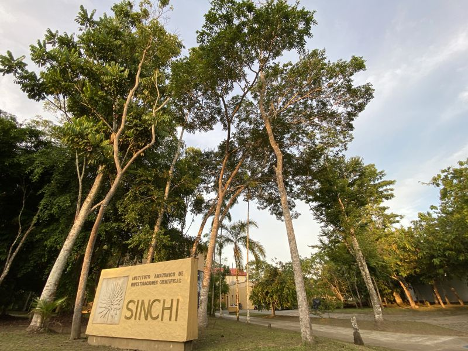
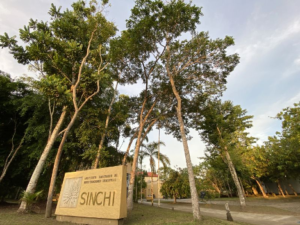
The meeting will be inaugurated this Monday, May 11 at the main headquarters of the SINCHI Amazonian Institute of Scientific Research, in a city where discussions about the Amazon are not far away. In Leticia, as in much of the Amazon biome, the effects of climate change, the loss of biodiversity and traditional knowledge, river pollution, pressure on wild species, and forest fires are part of the daily lives of the communities.
The opening schedule will feature the participation of the Vice Minister of Environmental Policies and Standardization of Colombia, Edith Bastidas Calderón; a representative of the municipality of Leticia; a representative of Amazonas; and the president of the Bioamazonia Network and general director of the SINCHI Institute, Luz Marina Mantilla Cárdenas.
They will also participate Luiz Gabriel Todt de Azevedo Todt de Azevedo, Head of the Amazon Coordination Unit of the IDB Group Inter-American Development Bank Inter-American Development Bank (IDB), Angel Viloria, of ACTO (Amazon Cooperation Treaty Organization – ACTO) y Fany Kuiru Castro, from the Coordination of Indigenous Organizations of the Amazon Basin (OFFICIAL COICA).
The technical opening panel, “Conflicts and Threats in the Pan-Amazon: Contributions of Science to the Sustainability of the Biome,” will bring together specialists from Brazil, Bolivia, Colombia, Ecuador, and Peru, whose research is conducted directly in the field and addresses concrete problems in the Amazon region. The presentations will cover topics such as mercury contamination, wildlife trafficking, climate change impacts, hydroelectric expansion and clean energy, integrated fire management, and the loss of traditional ecological knowledge and socio-ecological perspectives.
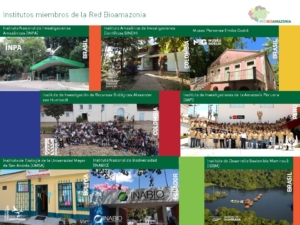
In addition to the opening public debate, the 3rd Annual Meeting of the Bioamazon Network will make it possible to advance the cooperation agenda among Amazonian scientific institutes, consolidating mechanisms for joint work, technical exchange, and regional coordination in the face of shared challenges in the Amazon.
#RedBioamazonia
#Leticia2026
#CienciaPanamazonica
#CooperacionTranfronteriza